Liechtenstein hack: the proof that the state fails to protect our data – the Federal Council must stop the transparency register before the end of September!
Press release of 5 August 2026
The spiral of intervention is confirmed once again
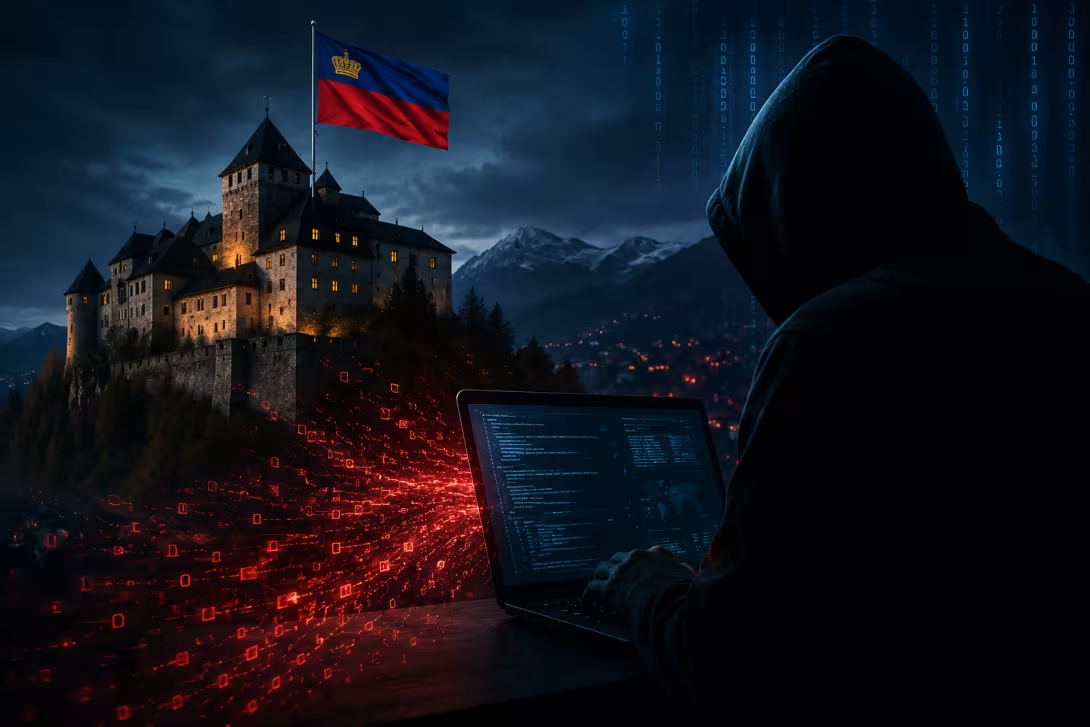
What is unfolding in Liechtenstein this week is not an isolated case but the logical consequence of a spiral of intervention that the Libertarian Party has been warning about for years. Every state intervention – today the fight against money laundering, tomorrow chat control – creates new problems, which are then to be «solved» with yet more state. The pattern is always the same: well meant, catastrophic in effect.
France and Liechtenstein: the honeypot effect in practice
France led the way: its crypto register was hacked, and ever since, the children of crypto owners have been targeted for kidnapping because criminals suddenly know their names and addresses. Now Liechtenstein has been hit: 31,000 legal entities, their beneficial owners, their financial circumstances – all in the hands of unknown perpetrators. Both cases illustrate the honeypot effect: whoever pools sensitive data centrally creates a target that would never have existed without this collecting mania. Criminals no longer have to track down wealthy individuals one by one – the state delivers the customer list to their door.
Pure EU compliance without any weighing of interests
Exactly this pattern threatens Switzerland on 1 October 2026 with the new transparency register at the Federal Office of Justice. And it is not even a genuine Swiss necessity, but purely regulatory compliance with the EU anti-money-laundering directive – regulatory imitation without any weighing of our own interests, even though Switzerland is not a member of the EU. And as with every state data pot, what comes next is foreseeable: what serves the fight against money laundering today will be tapped by the tax authorities tomorrow and by intelligence services the day after – misuse for other purposes is not the exception but the intention. Registers once created never shrink again; only the purposes they are put to are extended at will.
Zero accountability, irreversible damage
What is particularly cynical: in the end nobody bears responsibility for this data theft. No head of office resigns, no authority pays damages, no member of the Federal Council accepts the consequences. While private companies facing a data leak must reckon with fines, lawsuits and reputational loss, with the state it is the citizen who bears the full risk – and the state bears precisely none. This asymmetry would already be objectionable in the case of financial damage. With stolen personal data it is fatal, because unlike money, identity data once stolen can never be retrieved. A fine can be waived, a transfer reversed – stolen data is gone for good, and the damage is irreversible.
Forced happiness without any opt-out
On top of that: nobody was ever asked whether they wanted to entrust their highly sensitive asset data to this register. Anyone who refuses is punished – pure forced happiness without any possibility of opting out, while the market, with private, reputation-driven solutions, would long since have offered better answers.
The same rhetoric as with data retention and chat control
And the pattern is all too familiar to us: we know the same rhetoric of «only for protection» and «only in exceptional cases» from data retention and chat control – there too the state builds surveillance infrastructure that sooner or later is hacked or abused.
Costs for the honest, benefit for no one
What remains in the end is a grotesque cost-benefit ratio: from October, tens of thousands of Swiss are expected to shoulder a massive compliance burden in order to feed a system that is obviously and foreseeably insecure. The actual money launderers and terrorist financiers circumvent such registers anyway. The only ones affected are companies run by honest citizens. The state promises security against crime and instead supplies the blueprint for new crimes.
Demand
The Libertarian Party therefore calls on the Federal Council in unmistakable terms not to bring the Transparency Register Act into force on 1 October 2026. Liechtenstein has just painfully confirmed what we have always warned about: entrusting sensitive data to the state is not a gain in security but a security risk – no matter how fine-sounding the pretext with which it is promoted.
Contact
Anatol Lüthi, Board, anatol.luethi@libertaere-partei.ch, +41 76 227 98 77